Best Side Cutters for 2-3 mm Wire Without Crushing the Ends
When working with reclaimed packaging materials — think galvanized wire used to reinforce old crates or handmade storage totes — the challenge often lies not just in reusing the material, but in treating that wire carefully. For DIY enthusiasts who, like me, enjoy building storage systems from reclaimed boxes or constructing compact shelves in tight spaces, avoiding frayed wire ends is crucial. A careless cut can reduce your wire’s strength and turn a sturdy handle into a frail, springy hazard.
This post dives deep into selecting the best side cutters and pliers designed specifically for cutting 2-3 mm wire cleanly without crushing its ends. There's more to it than that. We’ll explore the importance of wire gauge and load capacity, how tool choice impacts the cleanliness of cuts and bends, and offer tips on reinforcing weak materials before drilling or anchoring your projects.
Why Does Wire Cutting Matter in Reclaimed Packaging?
Reclaimed packaging often relies on galvanized steel wire, sized roughly between 2-3 mm in diameter—about the thickness of many strong coat hangers or medium-gauge baling wires. This wire is the unsung hero of many upcycled storage systems, acting as handles, bracing, or closures.
When cutting this wire, especially if you’re planning to reuse pieces for structural jobs like hanging or binding, the cut quality directly affects the wire’s integrity. A frayed, crushed, or uneven end can:
- Weaken the tensile strength, risking sudden failure under load
- Create sharp points that snag fabric or scratch hands
- Make threading or bending tricky and uneven
- Increase corrosion risk if protective coatings are shattered
Thus, choosing the right tool isn’t just about making the job easier — it’s about making the reclaimed wire trustworthy again.
Understanding Wire Gauge and Load Capacity
Wire gauge measures a wire’s diameter, influencing both flexibility and strength. The 2-3 mm range (roughly 14-12 gauge) is a sweet spot for load-bearing tasks in small DIY projects. To visualize, a 2 mm wire is just under the thickness of a pencil lead, while 3 mm thick wire approaches the diameter of a chunky marker. This is roughly equivalent to holding 6-8 paperback novels stacked — imagine the wire as a sturdy spine supporting that weight.
Load capacity depends on material strength and cut quality. Galvanized wire hardened to 58-62 HRC (Rockwell Hardness Scale) boasts excellent wear resistance and tensile characteristics, making clean cuts essential to prevent micro fractures. Flawed cuts with ragged edges can serve as fracture initiation points under stress.
Side Cutters vs. Parallel-Action Pliers: What’s Best?
Both tools have their place in cleanly tackling 2-3 mm gauge wire. Understanding their mechanics helps you choose the best blade action and cutting style for your project.
Side Cutters
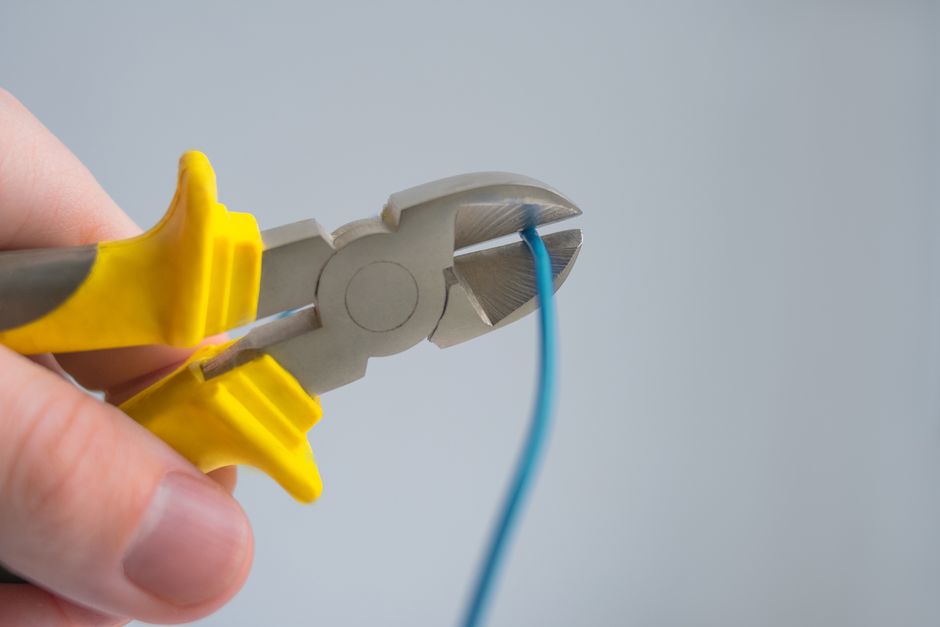
Side cutters, also known as diagonal cutters, feature angled blades designed to shear wire diagonally in a slicing motion. Their simple leverage and design make them common in electrical and general crafting tasks.
- Pros: Light weight, easy to find, good for quick cuts
- Cons: Tend to crush wire ends slightly under higher forces, especially near 3 mm thickness — increasing fraying
Many DIYers encounter ragged drill holes or tiny metal fragments in their cuts due to these crushers. The resulting frayed wire ends can turn anchored loops into weak points like broken book spines. Plus, they tend to compress the cut section unevenly, making bends unpredictable.
Parallel-Action Pliers
Parallel-action pliers use a unique mechanism where the cutting jaws remain parallel throughout the cut, applying even pressure across the wire’s cross-section. This action creates a cleaner, more uniform cut without crushing edges.
- Pros: Cuts cleanly with minimal distortion; excellent for galvanized wire between 2-3 mm
- Cons: Slightly more expensive and less commonly stocked; higher learning curve for use
The parallel cut works like a precise guillotine for your wire, cleanly slicing through the metal like carefully removed pages from a book bound tightly in a library. The difference in finish is immediately visible, reducing frayed ends and increasing safety when handling cut wire segments.
What to Look for in Side Cutters and Pliers for 2-3 mm Wire
Feature Ideal Specification Why It Matters Blade Hardness 58-62 HRC hardened steel Maintains sharp edges; prevents squashing wires which causes fraying Cutting Capacity Up to 3 mm galvanized wire Ensures clean cuts without excessive force or blade damage Handle Comfort & Grip Ergonomic, slip-resistant handles Reduces hand fatigue, improves control, avoids slips causing ragged cuts Cut Type Parallel-action preferred for clean cuts; angled side cutters for lighter work Affects cut cleanliness and wire integrity Jaw Finish Polished edges with smooth surfaces Prevents stress points and wire deformationTips to Avoid Frayed Wire Ends When Cutting
- Use the right tool: Prefer parallel-action pliers for clean cuts on 2-3 mm galvanized wire. Side cutters work but expect some slight crushing.
- Support the wire: Secure the wire firmly before cutting to prevent movement that causes ragged edges.
- Cut close to supports or reinforcement: Leave a few millimeters for bending to reduce stress near the cut ends.
- Keep blades sharp: Dull blades tear rather than slice, creating rough edges.
Reinforcing Weak Materials Before Drilling or Anchoring
Cutting wire is a step often followed by drilling or anchoring the the wire into your reclaimed component — be it a box corner or packaging tote handle. But weak or water-damaged wood and thin cardboard need reinforcement to hold wire anchors securely.
- Use laminated patches: Glue thin plywood or cardboard strips over the drilled area — think of adding extra ‘spines’ to a worn book cover.
- Pre-drill pilot holes: Small diameter holes reduce splitting and tearing of the material.
- Choose appropriate fasteners: Select galvanized nails or screws sized for minimal material penetration but sufficient hold.
- Add epoxy or wood glue: Strengthen anchoring points by applying adhesive before reinserting wire loops or hooks.
These reinforcements minimize sudden drops — when a wire handle slips or breaks free due to a lazy anchoring job — that can ruin your whole DIY storage system.
Comparing Popular Side Cutters and Parallel-Action Pliers
Tool Blade Hardness (HRC) Max Wire Diameter Clean Cut Quality Price Range Knipex Parallel-Action Pliers 60 HRC Up to 3 mm Very clean, minimal crushing High ($50-$80) Wiha Diagonal Cutters 58 HRC 2-2.5 mm Clean but minor crushing at thick wire Moderate ($30-$50) Channellock Heavy-Duty Side Cutters 59 HRC Up to 3 mm Reasonably clean; some fraying possible Low-Moderate ($20-$35)Conclusion: Cut Like a Pro, Build Like a Librarian
Think of reclaimed packaging wire as the binding packagingrevolution.net edge of a treasured DIY book collection. Every cut is like a page lift or spine fold — mishandle it with flimsy tools and you get ragged edges and weak joints that spoil the whole story. But with the right tools, especially parallel-action pliers featuring hardened 58-62 HRC blades, you get clean cuts, safe bends, and a reborn material ready to shoulder new loads.
Remember to reinforce soft materials before anchoring and always aim for clean cuts that resemble library-quality bindings — neat, sturdy, and reliable. Your storage solutions will thank you, and so will your hands!
If you found this guide useful, check back for more tips on transforming everyday reclaimed materials into lasting DIY storage treasures.