Raised Edge on a Game Table: Does It Get in the Way for Dining?
A raised edge can be a useful feature on a game table: it helps keep cards, dice, and small pieces from sliding off the playing surface. But when that same table has to serve dinner, homework, and the occasional pile of mail, the lip may feel less like a clever detail and more like something your elbows keep finding.
Whether a raised edge interferes with dining depends on its height and shape, the table’s overall dimensions, and how you actually use the room. In a small home, those details matter. A table that works beautifully for game night can become the everyday table by default—and an awkward edge, cramped chair position, or nowhere-to-store-the-leaves problem can show up several times a day.
The short answer: a modest, rounded lip usually won’t prevent dining, but a tall or wide raised rim can reduce comfortable tabletop space and make it harder to pull chairs close. Before buying, measure the edge, the usable surface, chair clearance, and the table’s path from curb to dining room. That last part is where a promising plan can take a tight turn.
What a Raised Edge Does—and What It Changes
Game tables may have a raised perimeter around a recessed playing surface. That recessed play area lip helps contain cards or game pieces and can make the playing area feel distinct from the surrounding frame. It may also be part of the table’s style, giving it a more finished or substantial look.
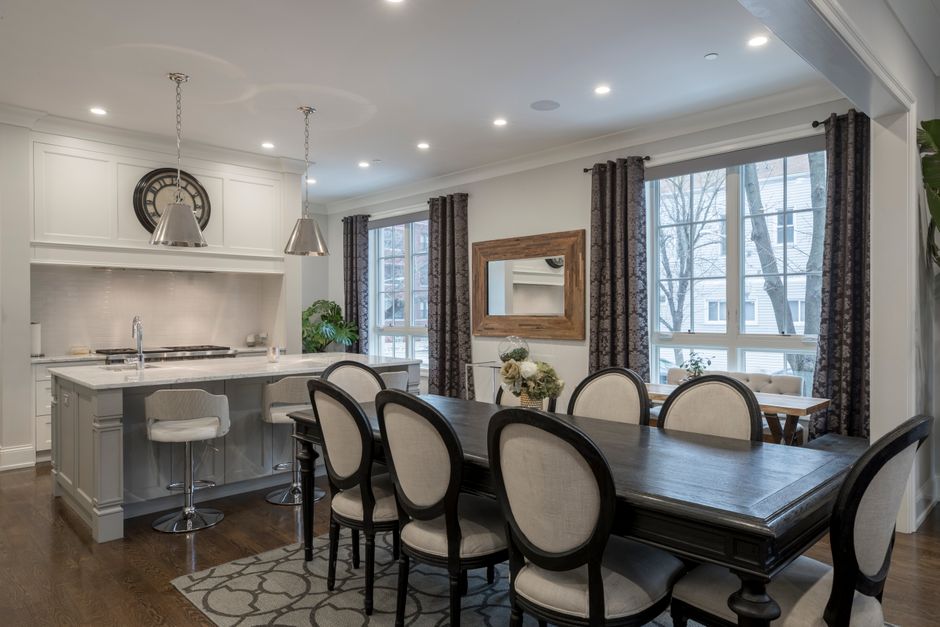
For dining, though, the rim changes the shape of the surface you can comfortably use. A plate can sit inside the recessed area, but diners may notice that their forearms meet the raised frame. If the lip is broad, it can also create a narrow ledge around the center—space that looks like tabletop in a photo but may not be useful for a plate, glass, or serving dish.
Pay attention to both height and width. A low, rounded edge may be barely noticeable. A tall, sharp, or outward-projecting rim can be more intrusive, especially when someone leans forward or rests their arms while eating. The table’s apron—the structure beneath the top—matters, too. Even with a shallow lip, a deep apron or low crossbar can stop a chair from sliding far enough under the table.
How the Edge Affects Dining Comfort
Game table dining comfort is not just about whether a plate fits. People need room to sit close, shift position, and rest their arms without feeling boxed in. A rim that catches a forearm might be tolerable for a quick meal, but irritating during a long dinner, craft project, or homework session.
Think about the difference between the overall tabletop size and the usable dining area. If the rim takes up space on all four sides, the central surface may be smaller than the headline dimensions suggest. will table fit elevator For example, a table advertised as 40 inches across could have a playing surface that is noticeably narrower once you account for the frame. Ask the retailer for the dimensions of the recessed area and the width of the border—not just the outside measurements.
Then check how people will sit. At a rectangular table, the table ends are often the tightest spots: knees may meet the apron, and the rim can make it harder to bring a chair close. At a square or round table, diners may have more flexibility, but chairs still need space to pull out. I mentally count chair-clearance inches whenever I enter a dining room, because a tabletop that fits neatly between walls can still leave nowhere to sit.
Try a Simple At-Home Test
If possible, visit a showroom and sit at the table. Bring your questions—and a tape measure, which I keep in my jacket pocket for exactly this kind of decision. Rest your forearms near the edge, place a plate where you would normally eat, and slide a chair in and out. If you cannot try the exact model, reproduce the tabletop dimensions at home with masking tape or cardboard. Add the rim’s width and height as best you can.
- Can you sit close without your knees hitting the apron?
- Can your forearms rest comfortably, or do they meet a sharp or high edge?
- Will plates and glasses fit without crowding the recessed area?
- Can serving dishes sit within easy reach without taking over the whole table?
- Can people pull their chairs out without blocking a doorway or walkway?
Measure for Everyday Table Usability, Not Just Game Night
One of the easiest mistakes is measuring the table but not the room around it. In a compact dining area, chair pull-out space is not optional. A rough planning target is about 36 inches from the table edge to a wall or other obstacle where people need to sit and pass behind them. In tighter layouts, you may manage with less on one side, but test the actual chair and traffic pattern before committing. A chair that technically fits is not the same as a chair that can be used comfortably.
Also measure the height from the floor to the underside of the apron, not only the tabletop height. Dining chairs vary, and arms on an armchair may not clear the table. A game table with a thick frame or deep apron can limit which chairs tuck in. That affects everyday table usability just as much as the raised edge itself.
What to measure Why it matters What to ask or test Outside tabletop dimensions Shows the table’s full footprint Will it leave enough room for chairs and walkways? Recessed play area dimensions Reveals the usable flat area inside the lip Can your usual plates and serving pieces fit? Lip height and width Helps predict contact with arms, plates, and glasses Is the edge rounded, sharp, low, or broad? Floor to apron clearance Determines whether chairs and knees fit underneath Will your preferred chairs slide in comfortably? Chair pull-out and traffic space Prevents a table from blocking daily movement Can someone sit while another person passes? Delivery route Confirms the table can reach the room What is the tightest turn from curb to dining room?That last line deserves its own reminder. Measure doorways, elevator openings, stair landings, and the turn where a hallway changes direction. A table may fit through a door on paper and still be too awkward to pivot at the landing. If it comes apart, ask what disassembles and whether the top can be handled separately. A floor plan doesn’t include the tightest turn from curb to dining room, but the delivery crew will definitely meet it.
Small-Home Reality: Where Does the Overflow Go?
In a small home, furniture has to earn its footprint. A game table may be attractive because it serves more than one purpose, but it will probably collect more than game pieces. Mail, shopping bags, a laptop, schoolwork, and the thing you meant to put away yesterday can all migrate to the nearest flat surface.
A recessed play area can make that clutter feel contained, but it can also make the table harder to reset. Loose items settle around the edge or into the recessed surface. If the table has a cover, ask whether it is easy to lift and where you will store it during meals. If the rim is too high for a serving platter to sit comfortably, you may end up clearing the entire table every time you dine—which is manageable only if there is somewhere else to move everything.
Before choosing a multifunctional table, decide what gets stored nearby. A shallow cabinet, drawer unit, or lidded basket can give game supplies and daily clutter a landing place. If the table has leaves, include those in the storage plan from the beginning. “We’ll find a spot later” is how leaves end up behind a sofa or leaning in a closet where they block the vacuum.
Drop-Leaf and Gateleg Tables: Helpful Flexibility, Real Trade-Offs
Drop-leaf and gateleg tables are popular in small rooms because they can be compact most of the time and larger when needed. They can be a smart alternative to a permanent oversized table, but the support system and seating plan deserve a close look.
A drop-leaf table typically has one or more hinged sections that lower when not in use. This can reduce the footprint, but check where the legs sit when a leaf is raised. The supports may interfere with a chair, and the usable edge can change depending on which side is open. A leaf that makes the tabletop larger does not automatically create comfortable seating for another person.

A gateleg table uses hinged legs that swing out to support the leaves. It can offer more usable surface when fully opened, but the swung-out legs need clear floor space. In a narrow dining area, they may land right where a chair or person needs to go. Check the table in both its compact and expanded positions, not just the attractive fully opened showroom setup.
- Measure the table closed and fully open.
- Check where the supports and legs land beside each chair.
- Confirm how much room is needed to swing the legs or lower the leaves.
- Ask whether the leaves are attached or removed for storage.
- Think through where the table will live on ordinary days, not only when guests arrive.
Extending Tables: Plan the Leaf Storage Before You Buy
An extending table can be a practical choice if you need a compact everyday size and extra room for occasional guests. But the extension mechanism does not solve every space problem. The extended length can be much greater than the closed length, and a table that fits between the walls when closed may block the main route through the room when expanded.
Ask for the exact length with each leaf installed. Product descriptions sometimes advertise a table’s seating capacity without giving a clear extended length, which makes it hard to judge whether “seats eight” means a comfortable dinner or a tight arrangement with little elbow room. Count the seats you actually need and check where the end chairs will go. At a small table, adding a place setting is not useful if the person in that seat cannot pull out the chair.
Leaf storage is the other half of the decision. Some tables store leaves inside the table; others require a closet, under-bed space, or a dedicated storage bag. Measure the storage spot, including the height and width needed to maneuver the leaf into it. A leaf is furniture, too—it has to fit somewhere without being bent, scratched, or wedged against a water heater.
If the table has a raised edge around a recessed center, ask how the extension changes the dining surface. Does the lip continue across the leaves? Does the extension create a level surface, or a seam that affects where plates sit? Confirm how the table looks and feels when closed and extended. The game-friendly configuration may not be the dining-friendly configuration.
When a Raised Edge Is a Good Fit
A raised edge may work well if games are a regular part of your household, the rim is low and comfortable, and the recessed area is large enough for ordinary meals. It can also suit a dining room where the table has a clear purpose and the chairs already fit beneath it. If you prefer a more contained playing surface and rarely host elaborate meals, the trade-off may be worthwhile.
It is less likely to suit you if the table is your only work surface, you serve meals family-style with large platters, or diners tend to lean on the edge. A tall rim can be especially annoying if you eat there several times a day. The right choice depends on your routine—not on how many functions a product listing claims the table can perform.
A Quick Decision Checklist
- Measure the usable surface. Get the recessed area dimensions, not just the outside size.
- Test the edge. Check the lip’s height, width, and shape against your arms and dinnerware.
- Confirm chair fit. Measure apron clearance and try the chairs you plan to use.
- Protect walkways. Account for chair pull-out space in the room’s tightest traffic area.
- Plan the expanded setup. Measure drop leaves or extension leaves in use, including end-chair space.
- Choose a storage home. Decide where game supplies, covers, and spare leaves will go.
- Check the delivery route. Measure the tightest turn from curb to dining room, including stairs and elevator doors.
The Bottom Line
A raised edge does not automatically make a game table uncomfortable for dining, but it does make the usable surface and chair fit more important. A low, rounded rim around a roomy recessed area may be easy to live with. A broad or tall lip, combined with a deep apron or crowded room, can make meals feel cramped even when the table’s outside dimensions seem generous.
For the best game table dining comfort, test the table as a dining table—not just as a game surface. Measure the rim, check chair clearance, and plan for overflow clutter, leaves, and real-life traffic. The goal is a table that works on an ordinary Tuesday, not only on game night or when every chair is perfectly tucked away.