What Frame Finishes Match Bathroom Faucets - Brass, Matte Black, or Wood?
Choosing the right mirror frame finish to complement your bathroom faucets — be it brass, matte black, or wood — is often seen as a purely aesthetic decision. But from a practical, lighting, and spatial standpoint, it’s more nuanced. As an architect and bathroom-spec enthusiast with 12 years’ experience in residential remodel documentation, I’ve learned that mirror frame material and color not only speak style but affect lighting layout, placement heights, and functionality.
In this post, we'll explore:
- How mirror types serve different functions beyond decoration
- Sizing rules tied to lighting placement suggested by the National Kitchen & Bath Association (NKBA)
- Matching mirror frame finishes to brass, matte black, or wood faucets
- Coordination with glaziers and electricians on mirror installation and lighting
- Task lighting vs ambient lighting strategies for effective bathroom design
Understanding Mirror Types as Functional Decisions
The first step in specifying a mirror isn’t picking its finish or shape. It's to define its function. Mirrors in bathrooms polished edge frameless mirror come with many permutations: fixed or adjustable mounting, storage-backed or plate glass only, backlit, front-lit, or combined lighting.
Mirror Shapes and Storage Options
- Plate glass, framed mirrors: Classic and decorative, but depend on ancillary lighting for adequate facial illumination.
- Backlit LED mirrors: Usually frameless or with ultra-thin frames — popular for modern aesthetics and even light distribution.
- Medicine cabinet mirrors: Combine reflective surface with storage but tend to be deeper and require special mounting.
- Demister-equipped mirrors: Critical in high humidity, prevents fogging, especially important around showers or tub areas.
From my experience coordinating with glaziers, templating and installing plate glass mirrors requires precise measurements anchored to plumbing and lighting. The mirror must not crowd or conflict with lighting fixtures such as sconces. Standard depth allowances and edge finishing prevent water damage and fog accumulation.
Mounting Styles and Lighting Integration
Mounting style influences lighting choices:
- Wall-mounted framed mirrors offer flexibility but need coordination with electricians for hardwired lighting if adding backlit LEDs or in-frame lighting.
- Recessed medicine cabinets limit mirror thickness and frame options, impacting finish choices.
Hardwired LED mirrors with integrated lighting or added electrical feeds must follow local code and fixtures placement per NKBA guidelines to avoid glare and provide task-friendly illumination.
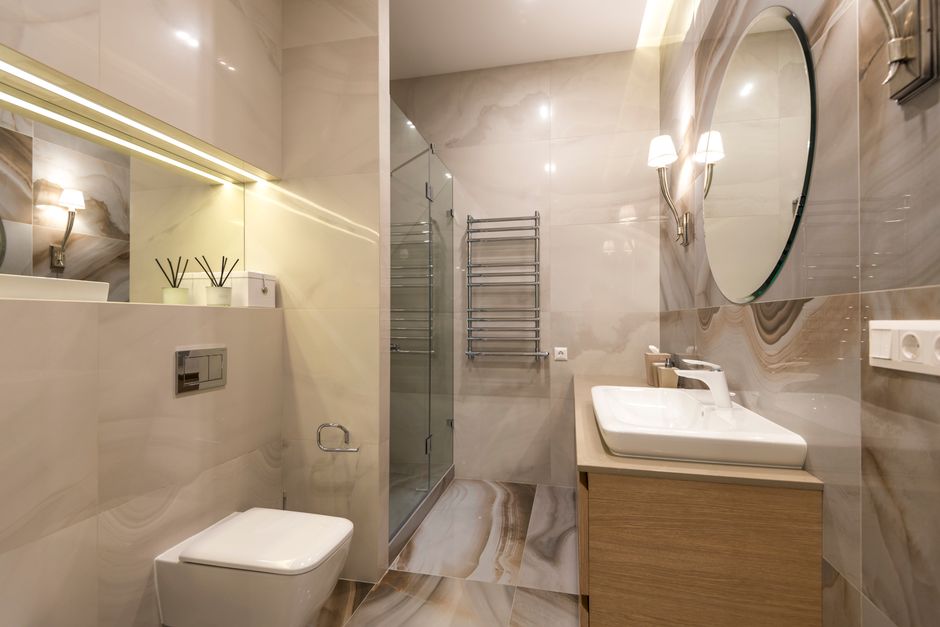
Mirror Sizing Rules Tied to Lighting Layout
The National Kitchen & Bath Association (NKBA) offers trusted sizing and placement standards that avoid common pitfalls:
- Mirror width: Should not overwhelm or crowd the space. A good rule is matching mirror width to the vanity countertop minus enough space for sconces on either side.
- Sconce space: Minimum 12 inches clearance between mirror edge and sconce centerline typically recommended to allow fixture size and avoid visual clutter.
- Mirror height: Typically 36 to 42 inches tall, mounted so the middle of the mirror is about 60 inches from the floor for average adult height users.
- Vertical alignment: Task lighting (such as sconces) should be mounted at approximately 66 to 70 inches from floor, flanking mirror edges, ensuring even light distribution on the face.
Ignoring these rules often leads to oversized mirrors that crowd sconces or lighting that cuts harsh shadows on faces. From my documentation work, always decide lighting layout before confirming mirror width — a quirk I swear by.
Matching Mirror Frame Finish to Faucets: Brass, Matte Black, or Wood
Let’s talk finish coordination — a conversion between plumbing and mirror framing.
Brass Framed Mirror
Brass faucets are warm, often vintage or transitional in look. A brass framed mirror naturally complements, reinforcing cohesive metallic warmth. Whether polished or aged brass, the idea is a unified metallic accent that reads as intentional.
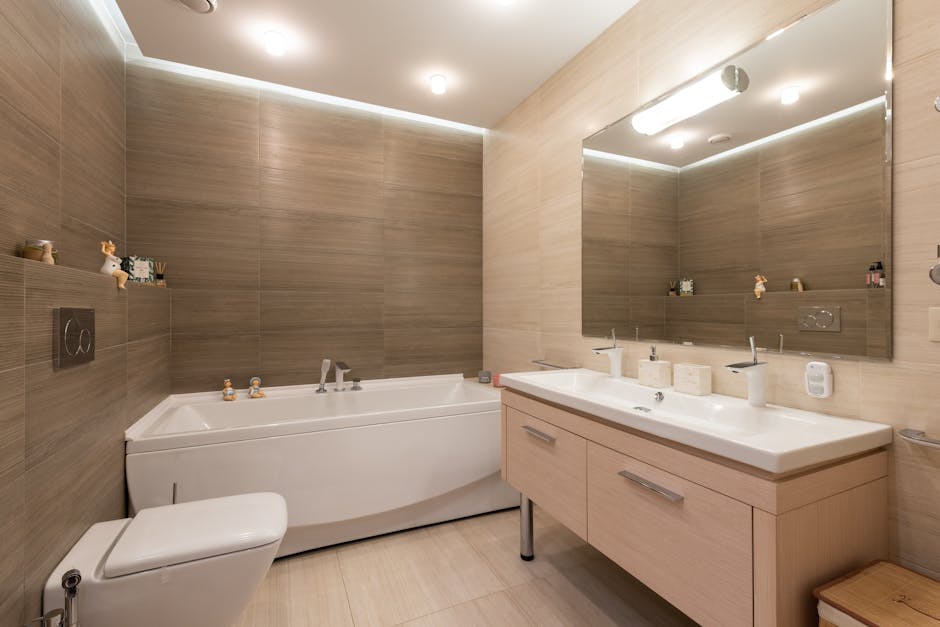
Some considerations:
- Finish tone uniformity: Avoid mismatched brass tones that contradict each other (e.g., bright yellow brass sink faucets and dark aged brass mirror frames) unless a deliberate layered-metal effect is the goal.
- Lighting reflection: Brass frames with reflective surfaces cast warm accents, enhancing ambient light from sconces or backlit mirrors.
- Moisture and maintenance: Unsealed brass frames can tarnish under bathroom humidity—watch for unsealed edges and make sure consult your glazier on sealants.
Matte Black Mirror Frame
Matte black faucets are modern, minimal, and bold. Matching with a matte black mirror frame creates a sleek statement — Discover more here think “black-on-black” high contrast against pale walls or bright tiles.
- Demister yes. Dashboard maybe: Matte finishes don’t show fingerprints or water marks as easily as polished metals, but full sealing on edges is a must for shelf life in humidity.
- Lighting choices: Matte black frames do not reflect light, so space lighting wisely. Flanking sconces are almost mandatory to offset the absorption effect and provide clear task lighting.
- Trend alert: Matte black is trendy; expect some future updates. A simple squared or minimal frame keeps the look enduring.
Wood Framed Mirror
Wood faucet finishes are emerging but less common. Wood framed mirrors impart warmth and a natural, spa-like vibe. Wood requires the most care in humid environments.
- Sealing is critical: Unsealed or poorly sealed wood edges swell, warp, or delaminate. Always go for marine or humidity-rated sealants.
- Matching faucet finishes: If the faucet is matte black or brass, wood frames tone down metal accents offering balanced tactile warmth.
- Lighting impact: Wood frames may absorb or diffuse light differently; pair with Golden Lighting’s warm LED sconces or pendant fixtures to mimic natural tones.
Task Lighting vs Ambient Lighting in Mirror Choices
It’s a mistake to view mirror lighting as purely decorative. Proper lighting ensures flawless grooming and safe routines.
Lighting Type Purpose Mirror Consideration Placement Task Lighting Illuminates face for shaving, makeup, etc. Flanking fixtures or integrated mirror lighting essential Eye level (~66-70 inches) on either side of mirror, 12” from edges Ambient Lighting Overall bathroom illumination Ceiling fixtures or backlit mirrors Ceiling or integrated LED panelsConsulting your electrician early is crucial if you intend hardwired LED mirrors or additional circuits for sconces. Lighting dimmers and CRI (Color Rendering Index) ratings also matter: aim for fixtures with CRI 90+ for true color rendition.
Practical Tips to Avoid Mirror and Finish Dilemmas
- Do not buy mirrors before lighting layout. I keep a list of mirror sizes that have failed in my projects—mostly oversized pieces crowding sconce space.
- Prefer demister-equipped mirrors in high humidity zones. Without it, cheap frames or unsealed edges stop being 'pretty' quick.
- Specify finish samples for faucets and mirror frames in the same lighting to compare under actual bathroom light.
- Work closely with glaziers and electricians. Proper templating ensures precise installation; electricians avoid overloading circuits and optimize wiring for hardwired LED mirrors.
- When mixing metals, keep it intentional. For example, pair brass faucets with brass frames or warm wood, but avoid mixing cool matte black with polished brass unless carefully orchestrated.
- Remember lighting temperature. Golden Lighting and Lumens offer excellent fixture options — warm tones (~2700K-3000K) complement brass and wood best; cooler (~3500K) for matte black.
Conclusion
Matching mirror frame finishes to your bathroom faucets—be it brass, matte black, or wood—is more than surface-level style. It’s about harmonizing materials, lighting function, and spatial dynamics. Keep lighting first, mirror width second, and finish coordination third, and you’ll have a design that looks polished and performs beautifully. Follow NKBA sizing and mounting standards, include your electrician and glazier early, and specify quality materials that stand up to humidity.
Ready for your next bathroom remodel? Choose wisely, light smart, and frame with intent!
— Your Architect and Bathroom Fixture Enthusiast